
Your contribution supports additional SAF use beyond the amount the airline industry is legally required to use.

Aviation is one of the fastest-growing sources of greenhouse gas emissions. Aircraft still rely heavily on fossil fuels and consume them in large quantities. Without additional measures, the sector’s climate impact is expected to continue increasing in the coming decades.
We help travelers make better-informed choices by integrating sustainability directly into the booking process. This allows you to easily compare flights based on their climate impact and reduce the emissions associated with your journey.
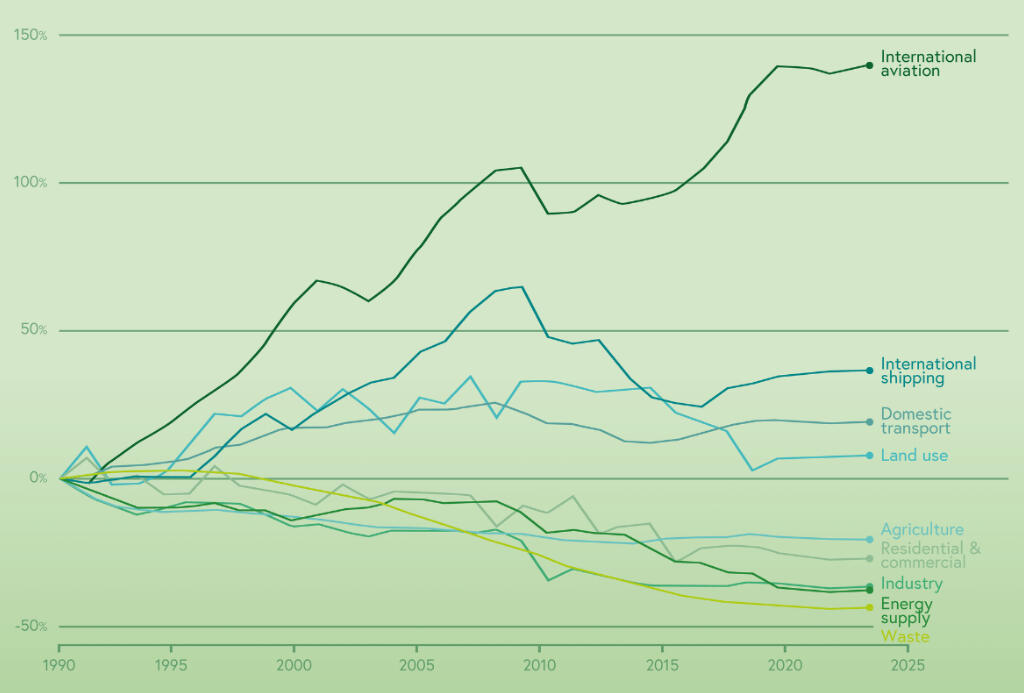
Every flight's footprint is shaped by four factors:

Distance

Aircraft Efficiency

Fuel Type

non-CO₂e impact
Together, these factors determine the emissions and overall climate impact of a journey. Together with our partners, we help travelers make more informed choices and reduce the environmental impact of their flights.
We help travelers make more informed travel choices and reduce their emissions.

Not all aircraft are equally fuel-efficient. Newer aircraft often consume less fuel per passenger and produce less CO₂e.
SAF can significantly reduce the lifecycle emissions of flying compared with conventional fossil jet fuel.
In addition to CO₂, non-CO₂ effects, such as NOₓ and contrails (the white streaks left behind by aircraft), also have a significant impact on the climate.
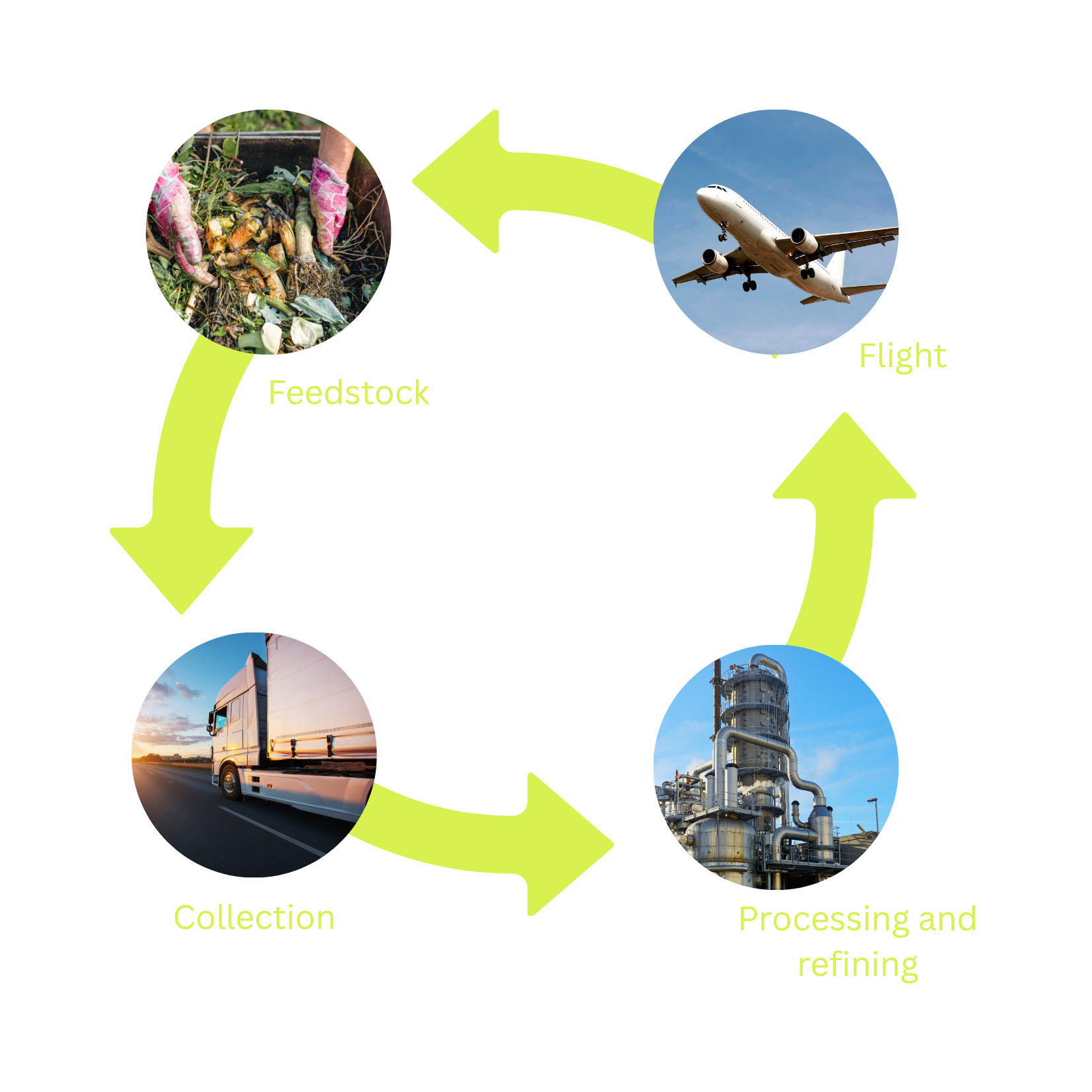
Alternative jet fuel, also called Sustainable Aviation Fuel (SAF), is an alternative to fossil jet fuel. It is produced from sustainable feedstocks, such as:
Depending on the production pathway, SAF can reduce the lifecycle emissions of flying by more than 80% compared with conventional jet fuel. It can be used in today’s aircraft and airport infrastructure without modification.
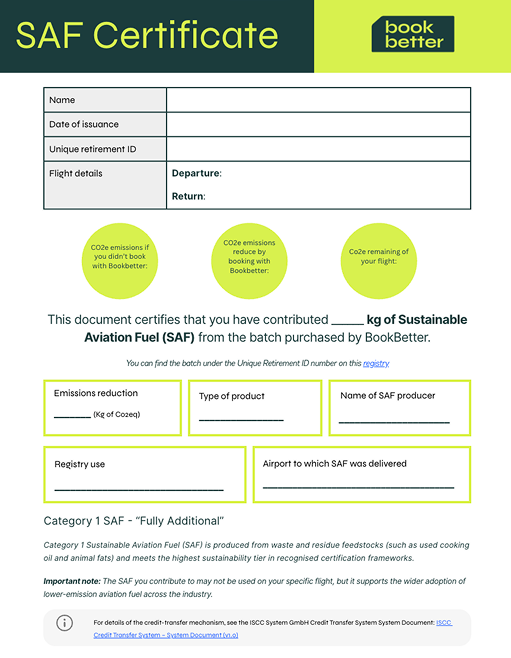
Your SAF contribution is independently registered and verified, giving you full transparency about the fuel, the emissions reduction achieved, and its final delivery.
Your contribution supports additional SAF use beyond the amount the airline industry is legally required to use.

When you travel by plane, the vast majority of your trip’s emissions come from the flight itself. That’s why focusing on reducing the impact of your flight is the most important first step.
At BookBetter, we encourage trains or other lower-emission options instead of planes. But when flying is the only practical choice, we help you reduce the overall impact.